
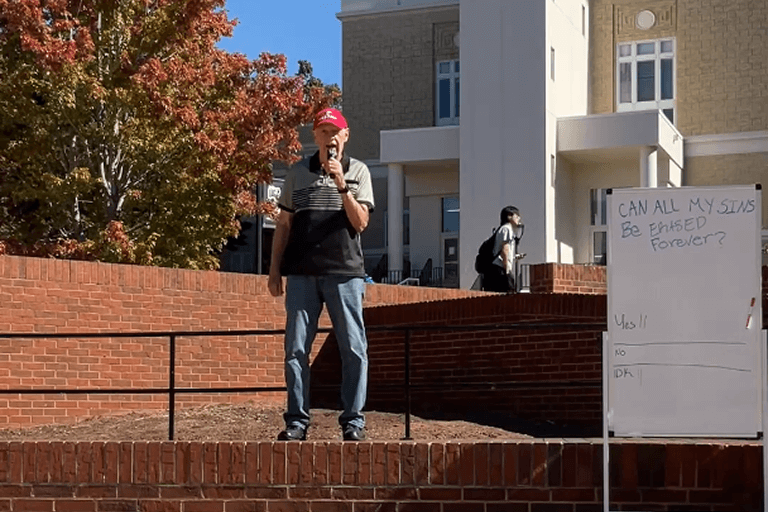
Can My Sins Be Wiped Away Forever?
Good afternoon. My name is John Otis, and I’m with Triumphant Gospel Ministries. Today I want to address a question many people ask: Can my sins be wiped away or erased forever? If they cannot be erased, then we are all in very serious trouble, because unless our sins are completely removed, there is no way we can be in heaven.
Some may think, “I don’t really care about that question,” but you should care because without forgiveness—without sins being erased—there is no hope of eternal life. Many people live with guilt for years, knowing they have done wrong and wondering whether God can truly forgive them. That guilt can become deeply troubling and heavy to carry.
What Is Sin According to the Bible?
If we are going to talk about sins being erased, we must first define what sin is. The Bible defines sin as lawlessness: everyone who practices sin practices lawlessness, and sin is lawlessness. In other words, sin is connected directly to God’s commandments.
Most people have heard of the Ten Commandments, which are written in the Old Testament. These commandments represent God’s standard for mankind and reflect His holiness. God’s law is a reflection of who He is.
The Ten Commandments and the Deeper Meaning of Sin
The commandments include: having no other gods, not making idols, not taking God’s name in vain, keeping the Sabbath holy, honoring father and mother, not murdering, not committing adultery, not stealing, not bearing false witness, and not coveting.
Some people may say, “I’ve never openly broken these commandments,” but Jesus taught that sin goes deeper than outward actions. For example, someone may say, “I don’t bow down to an idol,” but the Bible teaches that anything placed before God—such as money—can become an idol.
A person may say, “I’ve never committed murder,” but Jesus said that unjust anger toward a brother is murder in the heart. Someone may say, “I’ve never committed adultery,” but Jesus said that looking with lust is adultery in the heart. Sin, then, is not merely external behavior—it is also internal attitude.
Scripture also says that if a person knows the right thing to do and neglects to do it, that too is sin.
God Requires Perfect Obedience
What does God expect with reference to His commandments? He expects perfect obedience. Scripture says that those who rely on works of the law are under a curse, and cursed is anyone who does not abide by all things written in the law to perform them.
This is a high standard, but God is the one who sets reality. It is His universe, and His law reflects His holiness. So the question becomes: How much sin does it take to condemn us before a holy God?
The Bible answers: whoever keeps the whole law and yet stumbles in one point becomes guilty of all. This means one sin—one failure—makes a person guilty, because God is holy and cannot tolerate sin in His presence.
Our Condition and the Consequences of Sin
The Bible teaches that we are not merely injured spiritually—we are dead in our trespasses and sins. Isaiah describes humanity as unclean, stating that even our righteous deeds are like filthy rags, and that our iniquities have carried us away.
Sin creates a great separation between man and God. Isaiah says that God’s hand is not too short to save and His ear is not too dull to hear, but our sins have made a separation and hidden His face.
The Bible also says that the wages of sin is death—not only physical death but spiritual death. It says the soul that sins shall die. And the worst consequence Jesus warned about is hell. Hell is a real place, and Jesus spoke of it with terrifying seriousness, describing it as a place where the fire is not quenched and there is weeping and gnashing of teeth.
Yet the message is also this: you do not have to go there. There is a way to have your sins erased.
Why Good Works Cannot Save Us
Many people assume they can avoid judgment through good works. They believe God will weigh good deeds against bad deeds, and if the good outweighs the bad, they will be accepted. But the problem is that God says our works cannot justify us. Scripture teaches that by the works of the law no one will be justified in His sight, and that through the law comes the knowledge of sin.
The Bible also says salvation is by grace through faith, not by works, so that no one can boast. Human effort cannot erase sin. The speaker compares it to trying to jump from one side of a stadium to the other—you will fall far short. Everyone has sinned and fallen short of the glory of God.
The Need for a Substitute
If we cannot erase our sins by our own works, then we need something else. We need a substitute—someone who can stand in our place.
This substitute must do two things:
- Pay the penalty for our transgression.
- Perfectly keep the law of God in our place.
The Bible teaches that God demonstrated His love in this: while we were sinners, Christ died for us. Jesus is the bridge between sinful humanity and a holy God. He is presented as the only Savior of sinners.
Jesus as the Only Way
Some believe sincerity or religious effort is enough, but the message insists that sincerity cannot save. Jesus said, “I am the way, the truth, and the life. No one comes to the Father but by me.” Scripture also says salvation is found in no other name under heaven.
Jesus used another image: anyone who tries to enter another way is like a thief and a robber. He said, “I am the door. If anyone enters by me, he shall be saved.” The message emphasizes that reality is not defined by personal preference—Jesus’ claim stands whether people like it or not.
How Jesus Erases Sin Forever
How does Jesus pay the penalty for sin so it can be erased forever? Scripture teaches that Christ died for sins once for all—the just for the unjust—so that He might bring us to God. By His wounds we are healed.
A passage from Colossians is used to explain that people accumulate a huge debt of sin they cannot repay. But Christ cancels that debt, removes it, and nails it to the cross. The cross is presented as necessary because of our sin, and Jesus’ blood provides atonement—a covering for sin.
The message then describes God’s forgiveness with two powerful images: God casts sins into the depths of the sea, and He separates our sins from us as far as the east is from the west—an infinite distance—meaning full and complete forgiveness.
Christ’s Righteousness in Our Place
Not only do we need our sins erased, but we also need righteousness. Scripture says the Father made Him who knew no sin to be sin on our behalf, so that we might become the righteousness of God in Him.
The message emphasizes that believers are not only forgiven; they are clothed with the perfect law-keeping righteousness of Christ.
What We Must Do: Repent and Believe
Jesus preached, “The time is fulfilled. The kingdom of God is at hand. Repent and believe the gospel.” The message explains that two responses are necessary to receive what Christ has done: repentance and faith.
Repentance means acknowledging sin before God, confessing it, and turning away from it with a sincere desire to live differently. Faith means trusting that what Jesus has done in our place is true and surrendering one’s life to Him. The message states that without faith it is impossible to please God.
The Invitation to Rest and Eternal Life
For those burdened by guilt, Jesus offers an invitation: “Come to me all who are weary and heavy laden, and I will give you rest.” The message explains that Christ’s yoke is easy and His burden is light because salvation is not earned by human effort—Christ has done what we could not do.
It warns that those who believe in the Son have eternal life, but those who refuse Him remain under the wrath of God. The solution offered is to believe Jesus and His word.
Faith Comes by Hearing and a Personal Testimony
The message concludes by explaining that faith comes by hearing the word of God. When the gospel is faithfully proclaimed, it is described as Jesus speaking through His preachers.
The speaker shares a personal testimony: 56 years earlier, at age 18, he was an agnostic college student without meaning or direction. Someone shared a message like this with him, and he surrendered his life to Christ. He references the promise that if anyone is in Christ, he is a new creation—the old has passed away and the new has come.
Conclusion
The question asked at the beginning is asked again at the end: Is it possible for all my sins to be erased? The message answers yes—it is possible. But the response required is repentance, faith, trust, and surrender to Jesus Christ. The speaker ends by expressing hope that listeners will have ears to hear and hearts opened to receive Christ as Lord and Savior.